


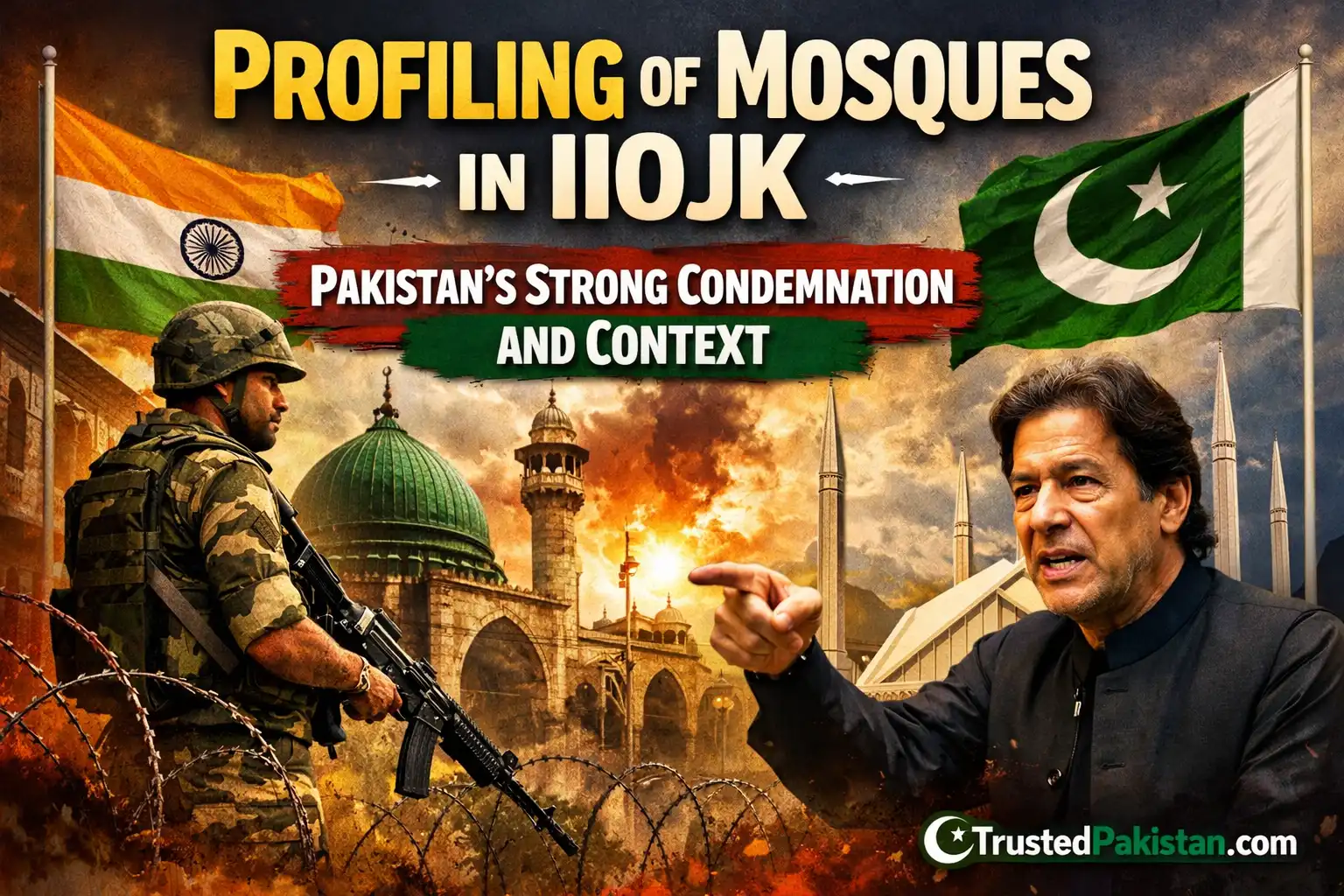
Profiling of Mosques in IIOJK | Pakistan’s Strong Condemnation
Pakistan has firmly condemned the profiling of mosques in IIOJK, calling it a blatant violation of religious freedom and an intrusive measure aimed at intimidating the Muslim population living under occupation. According to an official statement released by the Foreign Office Spokesperson Tahir Andrabi, the reported action — involving detailed data collection about mosques and their religious leaders — is seen as unlawful interference in religious affairs.
This condemnation comes as the Government of Pakistan reiterates its commitment to stand in solidarity with the Kashmiri people, raising concerns about the broader implications of such profiling on fundamental rights and freedoms in the disputed region.
What Is the Situation in IIOJK?
The profiling of mosques in IIOJK reportedly involves the forcible collection of personal data — including photographs, sectarian affiliations, and other sensitive details of mosque officials and religious figures such as imams, muezzins, and committee members. Pakistani officials have termed this activity as an attempt to systematically harass and intimidate worshippers.
Foreign Office officials state that this practice reflects a pattern of institutionalised Islamophobia driven by the ideological stance of the occupying authorities. By singling out mosques and Muslim clergy, these measures are seen as discriminatory actions that undermine the freedom to practice religion without fear.
This has raised serious concerns among human rights advocates and observers who argue that such measures could further erode trust and escalate tensions in the already volatile region.
Official Statement by Pakistan’s Foreign Office
The Foreign Office spokesperson emphasized that:
- The profiling of mosques in IIOJK constitutes a severe violation of the “fundamental right to freedom of religion and belief.”
- The targeted collection of personal details and affiliations of religious figures amounts to systematic harassment.
- These actions are part of a wider pattern of discriminatory policies against the Muslim community in Kashmir.
- The people of Jammu and Kashmir have an inalienable right to practice their religion without coercion, discrimination, or fear.
In the statement, Pakistan reaffirmed that it will continue to advocate for the rights of Kashmiris on international platforms, highlighting what it describes as ongoing violations of human rights and religious freedoms by the occupying authorities.


International Context and Human Rights Concerns
The profiling of mosques in IIOJK must be seen within the broader context of human rights concerns in Indian Illegally Occupied Jammu and Kashmir. International rights groups and observers have raised questions about the conduct of Indian authorities in the region, particularly concerning restrictions on religious practices and freedom of expression. Reports suggest that such measures are often justified under security pretexts, yet they disproportionately impact the Muslim majority population.
For additional context on Pakistan’s overall foreign policy and official statements on issues like religious freedom, you can visit the official Radio Pakistan report here.
Response and Reaction Within Pakistan and Beyond
Pakistan’s stance reflects a larger narrative of concern about the situation in IIOJK. Officials argue that any action targeting places of worship should uphold international norms and respect religious autonomy. The Pakistani government’s statement echoes the sentiment that punitive or invasive measures targeting religious institutions can generate fear and erode trust among local communities.
The government has urged the international community to pay closer attention to developments in Kashmir, framing the profiling of mosques in IIOJK as one among many actions that reportedly suppress religious identity and freedom.
Implications for Kashmir and Regional Stability
The condemnation is significant, not only because it addresses specific actions perceived as discriminatory but also because it highlights broader geopolitical tensions between Pakistan and India.
Pakistan maintains that its advocacy for the people of Jammu and Kashmir includes highlighting alleged violations of fundamental human rights, such as the freedom to worship without fear or interference. The issue of resorting to detailed data collection about mosques — described officially as the profiling of mosques in IIOJK — raises questions about how religious institutions are treated under the prevailing security framework.
The ongoing focus on these issues underscores the complex interplay between religious freedom, human rights, and geopolitical conflict in the region.
Call for International Accountability and Way Forward
The issue of Profiling of Mosques in IIOJK demands urgent international attention as it directly contradicts globally accepted principles of religious freedom and human dignity. Experts believe that targeting places of worship and religious figures can deepen mistrust and push the region toward further instability. Civil society organizations have warned that such measures create an atmosphere of fear where ordinary citizens hesitate to participate in basic religious and social activities.
