


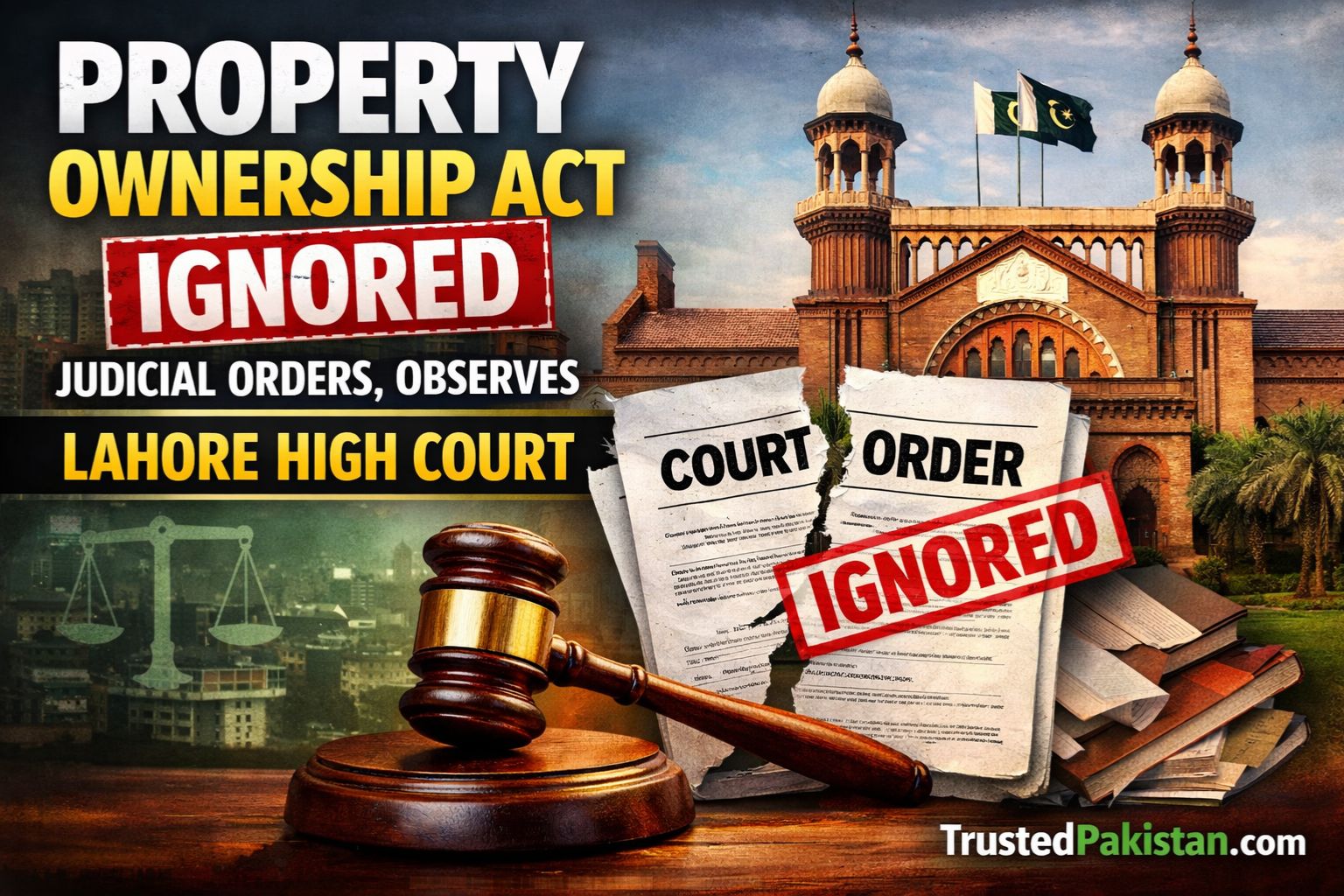
Property Ownership Act Ignored Judicial Orders | Observes Lahore High Court
Property Ownership Act came under sharp criticism from the Lahore High Court (LHC) after the court observed that earlier judicial orders were ignored during the formulation of the law. The remarks were made during a hearing on petitions challenging various provisions of the Act, which governs property ownership and related administrative procedures.
At the outset of the hearing, the Lahore High Court stressed that legislation must be framed in strict compliance with constitutional principles and binding judicial directives. The court remarked that ignoring court orders while drafting the Property Ownership Act could weaken the rule of law and create uncertainty for property owners.
Court Raises Concerns Over Legislative Process
The bench noted that courts issue directions after careful legal interpretation, and such orders cannot be disregarded by lawmakers or executive authorities. The judges emphasized that failure to follow judicial rulings during the lawmaking process results in legal contradictions and undermines public confidence in the justice system.
The court further observed that the Property Ownership Act appears to conflict with previous judgments related to property rights, ownership verification, and due legal process. Such contradictions, the bench said, could lead to confusion among citizens and unnecessary litigation.
Petitions Filed by Affected Property Owners
The case was initiated through petitions filed by several property owners who argued that certain clauses of the Property Ownership Act grant excessive authority to administrative officials. According to the petitioners, these provisions contradict earlier court rulings that sought to protect citizens from arbitrary actions by state departments.
The petitioners’ counsel informed the court that superior courts had already laid down clear guidelines on property ownership matters. However, those guidelines were allegedly ignored when the Act was finalized and implemented.
Government Defends the Property Ownership Act
During the hearing, representatives of the provincial government defended the Property Ownership Act, stating that the law was introduced to address long-standing issues in the real estate sector. They argued that the Act aims to streamline property records, prevent fraudulent transactions, and ensure transparency in ownership transfers.



Government lawyers maintained that the intention behind the law was public welfare and improved governance. However, the court reminded the authorities that legislative intent alone is not sufficient if judicial orders are overlooked.
Court Emphasizes Rule of Law
The Lahore High Court made it clear that all state institutions must operate within their constitutional limits. The bench observed that the legislature and executive are bound to respect judicial decisions, and any law that disregards such decisions risks being declared unconstitutional.
The court also highlighted that property rights are a fundamental aspect of economic stability. Any legal ambiguity surrounding property ownership can negatively impact investment, development, and public trust.
Impact on Property Owners and Real Estate Sector
Legal experts believe that the court’s observations could have significant implications for property owners across Punjab. If the court concludes that the Property Ownership Act violates judicial precedents, amendments to the law may become inevitable.
Real estate stakeholders have expressed concern that ignoring court orders could expose citizens to administrative harassment, delays in ownership confirmation, and prolonged legal disputes. Many argue that laws affecting property ownership must strike a balance between regulation and individual rights.
Constitutional Perspective
The court reiterated that the constitution guarantees the right to property and the right to due process. Any law that contradicts these protections, the bench said, cannot withstand judicial scrutiny. The judges stressed the importance of coordination between the judiciary and legislature to avoid conflicts that harm citizens.
Next Hearing
The Lahore High Court sought detailed responses from the concerned departments and adjourned the hearing to a later date. The court is expected to further examine whether the Property Ownership Act violates constitutional provisions or ignores binding judicial rulings.
Legal analysts believe that the final verdict may set an important precedent, reinforcing the principle that judicial orders must be respected during the legislative process.
