


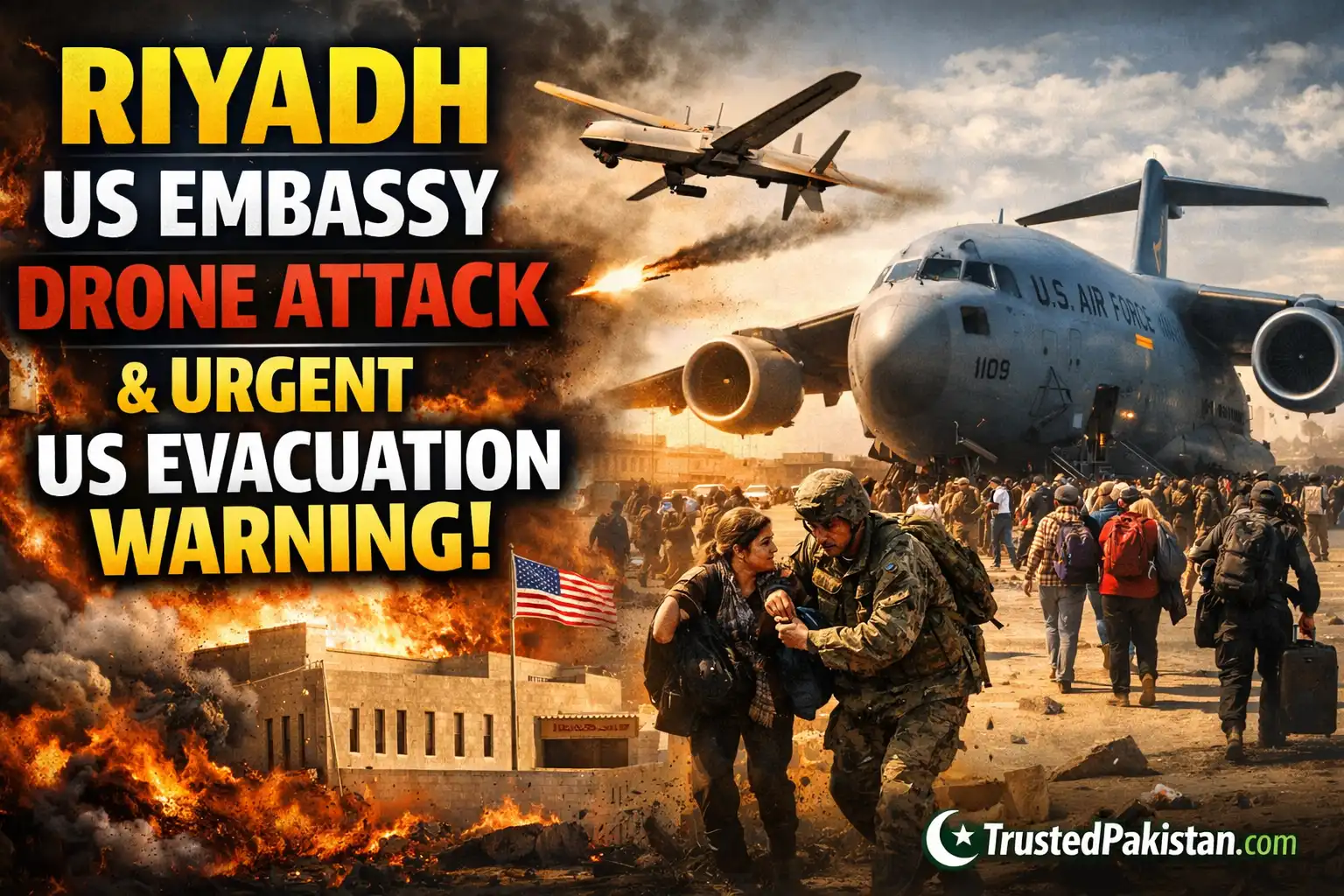
Riyadh US Embassy Drone Attack and Urgent US Evacuation Warning
The Riyadh US Embassy Drone Attack has triggered heightened diplomatic tension and urgent security reassessments across the Middle East. Following reports of a drone incident targeting the American diplomatic mission in Saudi Arabia’s capital, the United States government issued guidance advising its citizens to consider leaving several parts of the region due to escalating security threats.
This development has sparked international concern, intensified regional security measures, and renewed debates about diplomatic safety in volatile areas.
Overview of the Riyadh US Embassy Drone Attack
The Riyadh US Embassy Drone Attack reportedly involved an unmanned aerial vehicle approaching or targeting the perimeter of the American diplomatic compound in Riyadh. While official details remain limited, security agencies responded swiftly to neutralize the threat and secure the area.
Embassies are considered sovereign diplomatic spaces under international law, and any attack on such facilities is viewed as a serious breach of global diplomatic norms. The incident underscores growing concerns about drone technology being used in asymmetric warfare and targeted attacks.
Security experts note that the Riyadh US Embassy Drone Attack reflects broader regional instability, where non-state actors increasingly rely on drone capabilities to project power.
Immediate US Government Response
In response to the Riyadh US Embassy Drone Attack, the United States issued updated travel advisories urging American citizens in parts of the Middle East to reassess their security situations. In some areas, citizens were advised to consider temporary departure.
The US Department of State regularly updates travel warnings based on intelligence assessments and evolving threats. According to the official US travel advisory portal, citizens are encouraged to monitor alerts and enroll in security notification programs through the State Department’s website.
The evacuation guidance does not necessarily imply imminent danger everywhere but reflects precautionary measures following the Riyadh US Embassy Drone Attack.
Regional Security Implications
The Riyadh US Embassy Drone Attack highlights the growing vulnerability of diplomatic missions to drone threats. In recent years, drones have been used in attacks on oil facilities, military installations, and critical infrastructure throughout the region.
Saudi Arabia has previously faced drone-related incidents targeting strategic assets. The latest development intensifies concerns about:
- The protection of diplomatic facilities
- The expansion of drone warfare tactics
- Potential retaliation or escalation
Security analysts warn that the Riyadh US Embassy Drone Attack could prompt tighter airspace controls and expanded surveillance measures around diplomatic compounds.
Saudi Arabia’s Official Position
Saudi authorities reportedly condemned any attempt to destabilize diplomatic security and reaffirmed their commitment to protecting foreign missions. As a key regional ally of the United States, Saudi Arabia maintains strong defense and intelligence cooperation with Washington.
Following the Riyadh US Embassy Drone Attack, local security forces increased patrols and reinforced protective perimeters around sensitive locations.




Saudi Arabia has invested heavily in counter-drone technology, but evolving tactics present continuous challenges.
Impact on US Citizens in the Middle East
The most immediate effect of the Riyadh US Embassy Drone Attack has been psychological and logistical for American citizens living or working in the region.
Key concerns include:
- Possible flight disruptions
- Business operation interruptions
- Heightened security screenings
- Temporary relocation plans
Families, expatriates, and corporate entities are reviewing contingency strategies. Companies operating in energy, construction, and defense sectors are particularly attentive to updates following the Riyadh US Embassy Drone Attack.
Global Diplomatic Reactions
The Riyadh US Embassy Drone Attack has drawn attention from global leaders who emphasize the importance of protecting diplomatic facilities under the Vienna Convention on Diplomatic Relations.
International observers warn that attacks on embassies risk triggering diplomatic retaliation or broader geopolitical friction.
Governments worldwide are monitoring developments closely, especially given ongoing tensions across various Middle Eastern flashpoints.
What This Means for Regional Stability
The Riyadh US Embassy Drone Attack signals a potential shift in how diplomatic security threats are evolving. Drone warfare introduces new risks that are difficult to detect and intercept, making even heavily secured compounds vulnerable.
If such incidents continue, regional governments may implement:
- Stricter security protocols
- Enhanced intelligence coordination
- Expanded no-fly zones
- Accelerated investment in anti-drone defense systems
The broader geopolitical impact depends on attribution and response. If a responsible party is formally identified, diplomatic tensions could escalate rapidly.
Drone Warfare and the Future of Diplomatic Security
Beyond the immediate shock of the Riyadh US Embassy Drone Attack, experts are increasingly focused on how drone technology is reshaping global security dynamics.
Unmanned aerial systems are affordable, accessible, and capable of bypassing traditional defense systems. As their use expands, diplomatic compounds worldwide may need redesigned security frameworks.
Future diplomatic safety strategies could include:
- Advanced radar detection systems
- AI-powered surveillance
- Integrated air defense shields
- International agreements regulating drone proliferation
As the situation develops, governments and citizens alike will remain vigilant, aware that diplomatic security is no longer limited to ground-based risks but increasingly challenged by emerging airborne technologies.
