


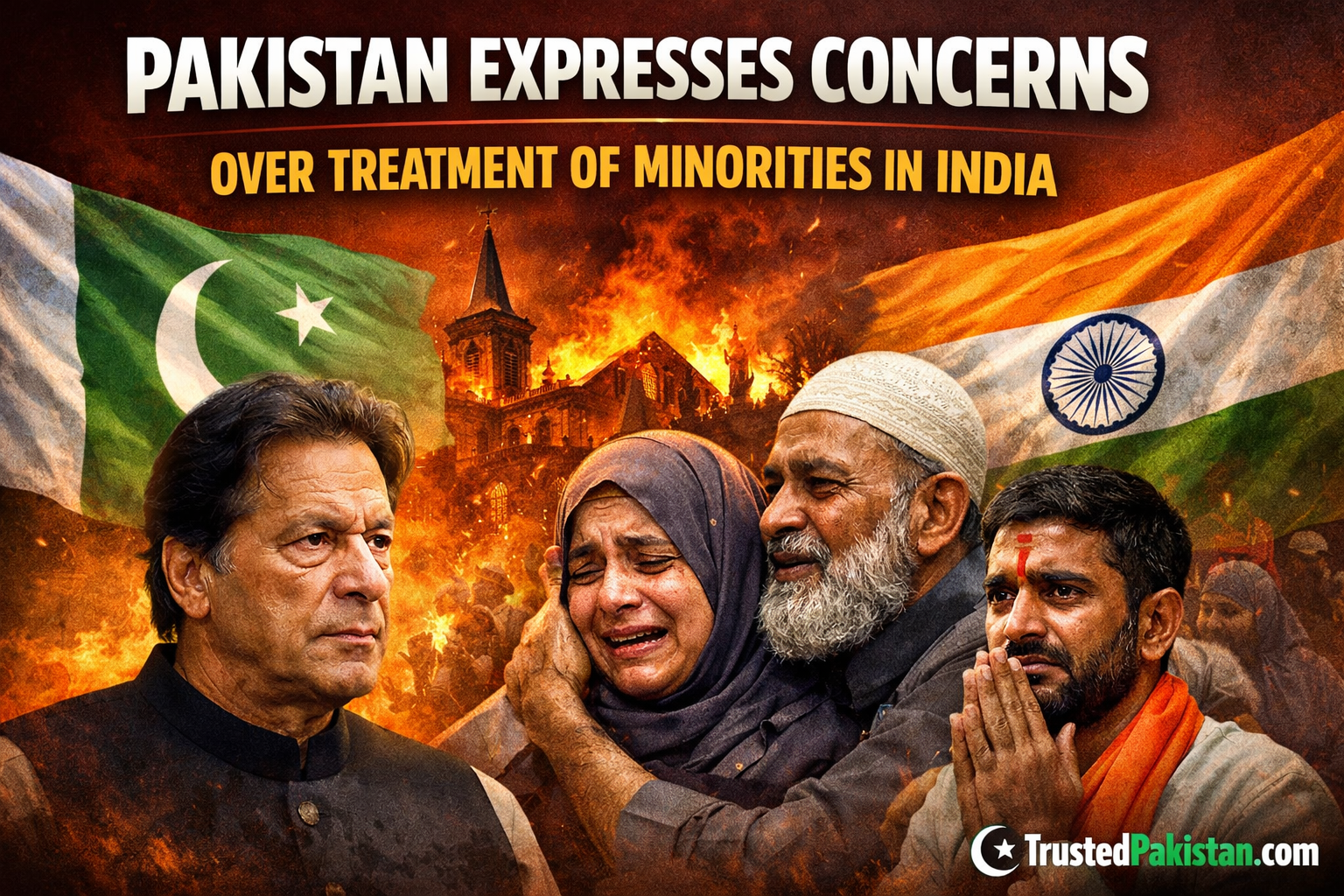
Pakistan Expresses Concerns | Over Treatment of Minorities in India
Pakistan expresses concerns over treatment of minorities in India as reports of discrimination, communal violence, and systemic marginalization continue to surface. The Pakistani government has repeatedly highlighted the need for India to uphold human rights standards and ensure the protection of minority communities from targeted persecution. These concerns have gained global attention, with international organizations and human rights advocates emphasizing the importance of safeguarding vulnerable groups.
The situation in India has raised questions about religious freedom, equality, and the safety of minorities. Communities such as Muslims, Christians, Sikhs, Dalits, and tribal populations often face legal, social, and political challenges that hinder their basic rights. International human rights organizations, including Amnesty International and Human Rights Watch, have documented multiple cases of violence, forced conversions, mob attacks, and systemic discrimination against these groups.
International Reactions to the Situation
Global leaders and organizations have expressed deep concern over the treatment of minorities in India. Pakistan’s statements resonate with other nations advocating for equal rights and protection for all citizens, regardless of religion or ethnicity. Various diplomatic channels and international forums have highlighted the need for India to take concrete measures to address these issues.
Countries and international bodies have urged India to ensure the safety of minorities and to strictly enforce laws against hate crimes. The increasing reports of communal violence and discriminatory policies have prompted several governments to closely monitor the situation, pushing for accountability and legal reforms.
Historical Context of Minority Rights in India
Understanding the historical context is crucial to grasp the challenges faced by minorities in India. Minority communities—including Muslims, Christians, Sikhs, and Dalits—have historically faced socio-political and economic marginalization. Despite India’s constitutional guarantees of equality and freedom of religion, implementation often falls short due to political, social, and bureaucratic obstacles.
Incidents of discrimination, unequal access to resources, and social exclusion have persisted over the years, leaving minority populations vulnerable. Pakistan emphasizes that recognizing historical injustices is vital for building a more inclusive society and preventing future conflicts.
Pakistan’s Diplomatic Stance
Pakistan expresses concerns over treatment of minorities in India through diplomatic channels, raising the issue in international forums such as the United Nations (UN) and the Organization of Islamic Cooperation (OIC). Pakistan stresses dialogue, accountability, and adherence to international human rights obligations to ensure the protection of minority communities.
The Pakistani government urges India to implement existing laws effectively and provide transparent reporting mechanisms for crimes against minorities. By highlighting these concerns globally, Pakistan aims to encourage India to uphold its international commitments and promote a culture of tolerance and inclusivity.



Social Media and Public Awareness
Social media has become a powerful tool in highlighting minority issues in India. Activists, NGOs, and journalists regularly share updates, reports, and campaigns to bring global attention to injustices. Platforms like Twitter, Facebook, and Instagram have amplified the voices of marginalized communities, enabling them to share their experiences with the world.
The dissemination of real-time information helps international audiences understand the gravity of the situation. Pakistan’s engagement in these discussions reinforces the importance of global solidarity in addressing the challenges faced by minorities.
TAP FOR MORE NEWS HERE
Legal and Human Rights Measures
Several international treaties and conventions obligate India to protect minority rights. These include the Universal Declaration of Human Rights (UDHR) and the International Covenant on Civil and Political Rights (ICCPR). Pakistan emphasizes that India must comply with these standards and create robust mechanisms to safeguard the welfare of minority communities.
Legal experts have noted that while India has constitutional provisions for minority rights, enforcement is inconsistent. Reports of mob violence, hate crimes, and discrimination against marginalized communities highlight the urgent need for effective legal reforms.
Role of Media in Highlighting Minority Issues
News outlets and investigative journalism play a critical role in uncovering discriminatory practices. Pakistan’s coverage emphasizes these reports to raise global awareness and apply pressure on Indian authorities. Detailed investigations into communal violence, forced conversions, and systemic inequality have provided compelling evidence of the challenges faced by minorities.
By bringing these issues to the forefront, media coverage encourages international actors to engage and hold governments accountable. Public awareness campaigns, documentaries, and research papers further contribute to highlighting the ongoing struggles of minority communities in India.
Global Implications and the Need for Action
Pakistan expresses concerns over treatment of minorities in India not only for regional stability but also for global human rights standards. The continued marginalization of minority groups undermines social cohesion and threatens peace in South Asia. International pressure, coupled with internal reforms, is essential to ensure that all communities are treated fairly and protected under the law.
Global organizations, governments, and civil society groups must collaborate to promote awareness, provide humanitarian assistance, and encourage legal reforms. Pakistan’s consistent advocacy reflects a commitment to defending human rights and supporting the principles of equality and justice.
