


Trump Greenland Tariffs Threat | A New Global Controversy
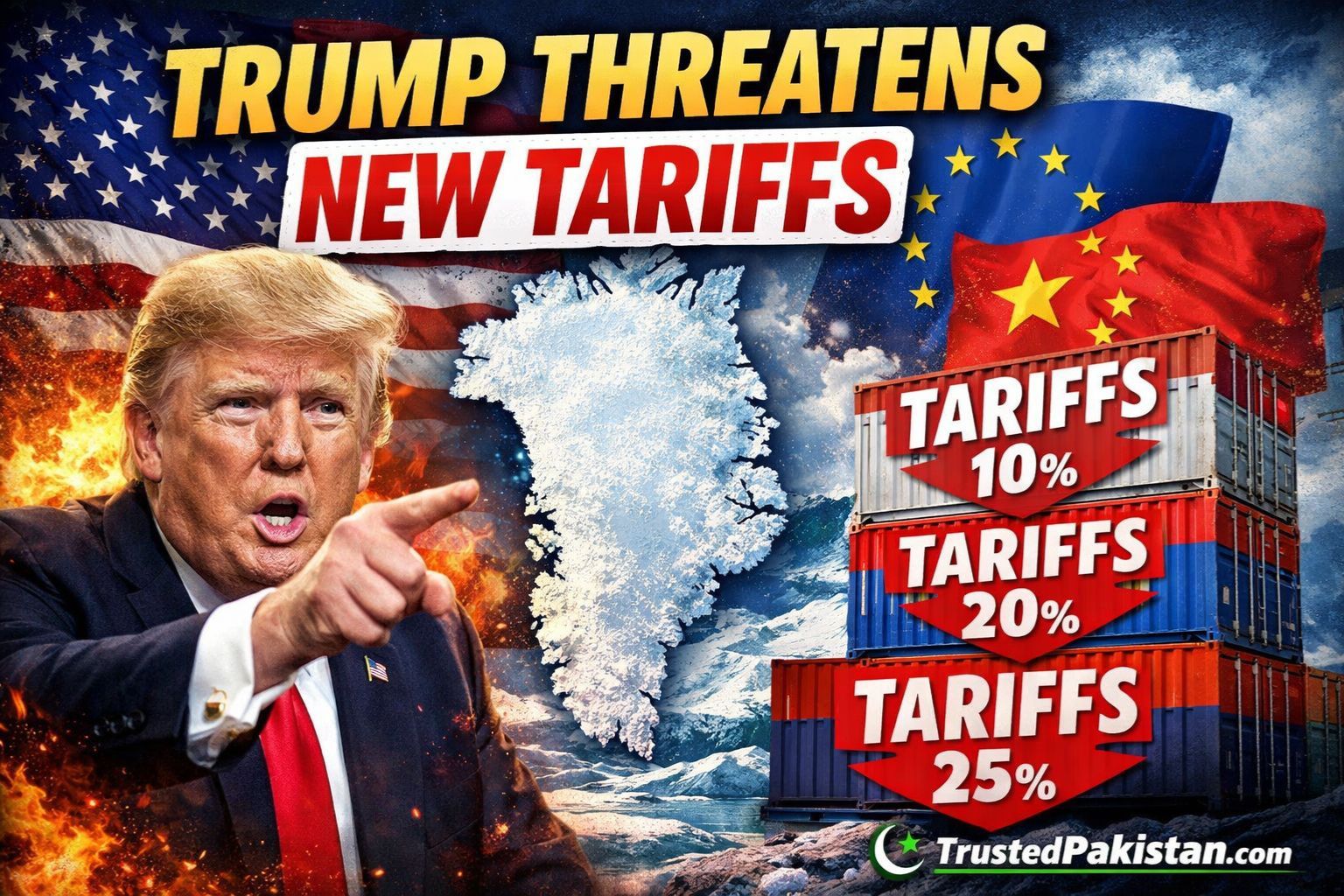
The Trump Greenland tariffs threat has become one of the most debated political issues of recent weeks. Former U.S. President Donald Trump signaled that he could impose economic tariffs on countries that refuse to support American control or influence over Greenland. This statement immediately created diplomatic shockwaves across Europe, North America, and the Arctic region. The Trump Greenland tariffs threat is not only about one island; it is about global power, trade routes, and military strategy.
Greenland is an autonomous territory under Denmark, but it holds enormous strategic value. It is located between North America and Europe, close to emerging Arctic shipping lanes and rich in natural resources such as rare earth minerals. Because of these factors, Washington has long viewed Greenland as important for national security. The Trump Greenland tariffs threat brought this long-standing interest into the open in a dramatic way.
Why Greenland Matters to the United States
Military and Security Importance
The United States already operates a military base in Greenland known as Pituffik Space Base. From this location, America monitors missile activity and Arctic airspace. Supporters of the Trump position argue that stronger control over Greenland would protect North America from rivals like Russia and China. Critics respond that the Trump Greenland tariffs threat ignores the sovereignty of Denmark and the rights of the Greenlandic people.
Economic and Resource Interests
Greenland contains large deposits of nickel, cobalt, uranium, and rare earth elements used in modern technology. As the world moves toward electric vehicles and green energy, these minerals are becoming more valuable. The Trump Greenland tariffs threat is therefore also linked to competition over future industries and supply chains.
International Reaction to the Trump Greenland Tariffs Threat
European governments reacted quickly. Danish leaders stated clearly that Greenland is not for sale and that any decision about its future belongs to its people. Several NATO members expressed concern that the Trump Greenland tariffs threat could weaken Western unity at a time of tension with Russia.
Greenlandic politicians also rejected the idea of being used as a bargaining chip. Local parties emphasized their desire for cooperation, investment, and respect — not economic pressure. Many analysts warned that using tariffs against allies would damage trust built over decades.
Legal and Ethical Questions
The Trump Greenland tariffs threat raises serious questions under international law. Greenland has the right to self-determination, and Denmark remains responsible for its foreign policy. Imposing trade penalties to force political change could violate global trade rules and NATO principles.
Experts note that modern diplomacy normally relies on negotiation rather than coercion. The controversy shows how economic tools like tariffs are increasingly used as weapons in geopolitical struggles. Smaller nations fear becoming victims of great-power competition.




Impact on Global Trade
If the Trump Greenland tariffs threat were implemented, the effects would not remain limited to Denmark. Tariffs could trigger counter-measures from the European Union, affecting American exports and global markets. Shipping through Arctic routes, investment in energy projects, and cooperation on climate research could all suffer.
Businesses in Pakistan and South Asia are also watching closely. Any conflict between the U.S. and Europe can influence currency markets and energy prices. The Trump Greenland tariffs threat therefore has implications far beyond the Arctic.
NATO Unity Under Pressure
NATO has always been based on mutual respect among allies. The Trump Greenland tariffs threat tested that principle. While the United States provides major military support to Europe, allies expect consultation rather than ultimatums. Several American lawmakers from both parties reassured Denmark that Congress would oppose any attempt to seize Greenland.
Diplomats argue that Arctic security should be strengthened through joint exercises, investment in local communities, and environmental protection. Turning allies into economic targets could push them to seek new partners.
Voices from Greenland
Ordinary Greenlanders worry that the debate ignores their daily realities. The island faces challenges such as climate change, unemployment, and infrastructure needs. Many residents welcome foreign investment but insist it must respect local culture and autonomy. The Trump Greenland tariffs threat made them fear becoming part of a geopolitical game.
Youth organizations in Nuuk called for education and sustainable development instead of military rivalry. Their message is that Greenland’s future should be decided in Greenland.
What Happens Next
Several scenarios are possible:
- The tariff idea fades after diplomatic talks.
- The U.S. seeks long-term economic agreements instead of pressure.
- Relations between Washington and Copenhagen become more tense.
Whatever path is chosen, the Trump Greenland tariffs threat has already changed the conversation about the Arctic. Governments now realize how quickly trade tools can be turned into political weapons.
