


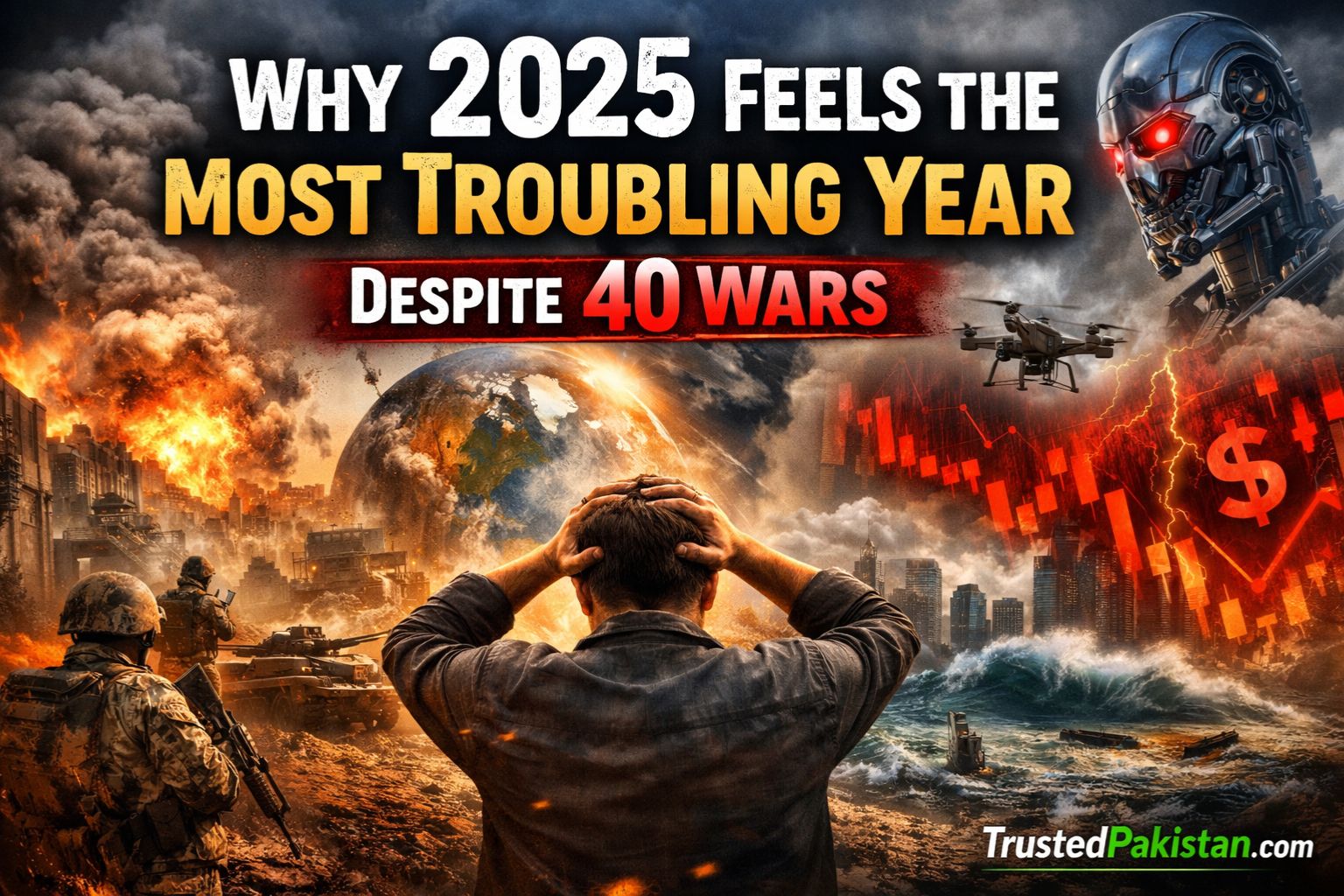
Why 2025 Feels the Most Troubling Year | Despite 40 Wars
Why 2025 Feels the Most Troubling Year Despite 40 Wars is a question that resonates deeply with people across continents. Humanity has endured dozens of wars, invasions, revolutions, and political crises throughout history. From the devastation of World War II to the long shadow of the Cold War, earlier generations faced violence on an unimaginable scale. Yet, despite this history, 2025 feels unusually disturbing and emotionally heavy.
What makes this year different is not just the number of conflicts, but the way fear has become personal, constant, and unavoidable. Anxiety is no longer limited to soldiers or people living near battlefields—it has entered our homes through screens, conversations, and daily economic struggles.
A World Constantly at War, Yet More Anxious Than Ever
Historically, the world has survived more than 40 major wars, including two world wars, proxy conflicts, civil wars, and regional clashes. In many of those periods, societies believed they were living through the darkest moments in history. However, why 2025 feels the most troubling year despite 40 wars lies in how crises today overlap instead of occurring one at a time.
In earlier eras, war was often the main concern. In 2025, war exists alongside climate emergencies, economic instability, cyber threats, and political polarization. These problems reinforce each other, creating a sense that there is no safe pause or recovery period.
24/7 Media and the Rise of the Fear Economy
One of the strongest reasons why 2025 feels the most troubling year despite 40 wars is nonstop media exposure. Social media platforms, live news updates, and viral videos ensure that conflict is always visible. Graphic images, alarming headlines, and breaking news alerts create a permanent state of emergency.
Unlike past generations who learned about wars through newspapers or radio reports with delays, today’s audiences experience conflict in real time. This constant exposure magnifies fear, often without offering solutions or closure. As a result, people feel overwhelmed, helpless, and emotionally drained.
Economic Pressure Touching Every Household
Another key factor in why 2025 feels the most troubling year despite 40 wars is economic pressure. Inflation, rising fuel prices, expensive housing, and job insecurity are affecting millions of households worldwide.
For many families, daily survival feels harder than ever. Even people living far from war zones feel unsafe because their purchasing power is shrinking and their financial future looks uncertain. When basic needs like food, fuel, and shelter become difficult to afford, anxiety spreads faster than any battlefield news.
Political Polarization and Loss of Trust
A Crisis of Leadership
Political instability has also intensified the sense of unease. Governments, institutions, and international organizations face growing public skepticism. Many citizens feel their leaders are either powerless or unwilling to protect them from global shocks.



This loss of trust explains why 2025 feels the most troubling year despite 40 wars. When people stop believing in leadership, every crisis feels unsolved and endless. Political divisions further deepen social tensions, making cooperation harder at both national and global levels.
TAP FOR MORE NEWS HERE
Climate Disasters Amplifying Global Fear
Climate change has turned from a future concern into a present-day emergency. Floods, droughts, wildfires, and extreme heatwaves are affecting millions of lives. Food shortages and water stress are becoming more common, especially in vulnerable regions.
The combination of war and climate disasters creates humanitarian crises on an unprecedented scale. This dangerous overlap strongly contributes to why 2025 feels the most troubling year despite 40 wars in collective memory.
Psychological Fatigue and Global Burnout
A Tired World
After years of pandemics, lockdowns, wars, inflation, and environmental disasters, people are emotionally exhausted. Mental health challenges have increased worldwide, and many individuals feel stuck in constant survival mode.
This psychological fatigue is a crucial reason why 2025 feels the most troubling year despite 40 wars. Even if casualty numbers are lower than past world wars, the emotional toll feels heavier because crises never seem to end.
Fear of an Uncertain and Unpredictable Future
Perhaps the most unsettling aspect of 2025 is uncertainty. In earlier conflicts, enemies were visible and outcomes were clearer. Today’s threats—artificial intelligence misuse, cyber warfare, economic collapse, and climate tipping points—are unpredictable.
This uncertainty fuels fear. People struggle to imagine what the next five or ten years will look like, and that lack of clarity defines why 2025 feels the most troubling year despite 40 wars.
Final Thoughts
Why 2025 Feels the Most Troubling Year Despite 40 Wars is not just about violence or geopolitics. It is about layered crises, nonstop digital fear, economic pressure, environmental threats, and deep emotional burnout. Humanity has survived wars before, but rarely has it faced so many interconnected challenges at the same time.
Understanding these factors is essential—not to surrender to fear, but to recognize the reality of the moment. Awareness is the first step toward resilience, adaptation, and hope in an increasingly complex world.
