


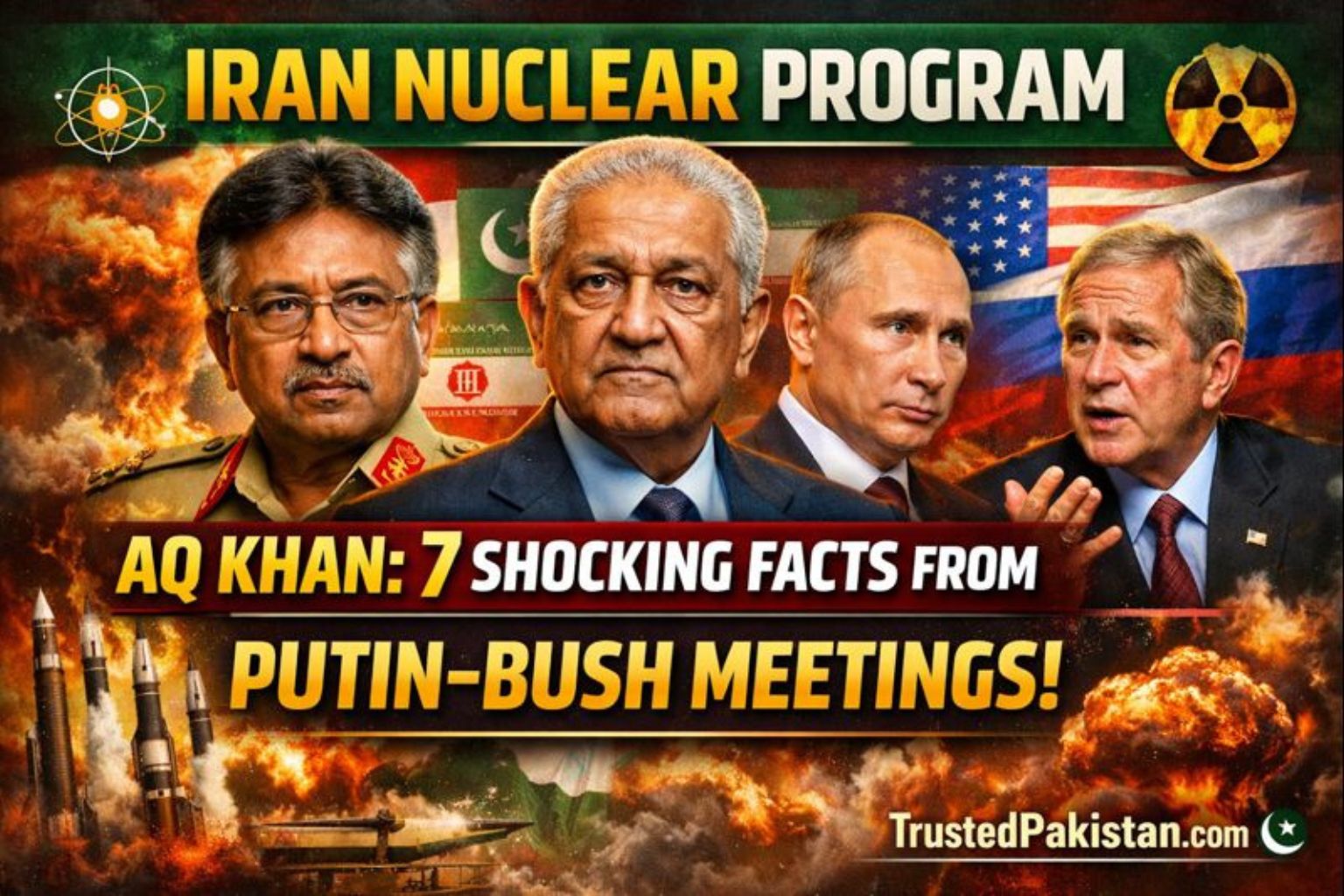
Iran Nuclear Program Pakistan Musharraf AQ Khan
Iran Nuclear Program Pakistan Musharraf AQ Khan remains one of the most debated and sensitive topics in global geopolitics. The issue gained renewed international attention after reports revealed that Russian President Vladimir Putin and former US President George W. Bush discussed Pakistan, former President Pervez Musharraf, and Dr. Abdul Qadeer Khan during high-level diplomatic meetings. These discussions highlighted deep global concerns regarding nuclear proliferation, regional security, and the long-term implications of Iran’s nuclear ambitions.
Iran Nuclear Program Pakistan Musharraf AQ Khan – Historical Background
The Iranian nuclear program officially began as a civilian energy initiative aimed at meeting growing domestic energy needs. However, over time, several Western countries raised suspicions that the program may also include undisclosed military dimensions. During the early 2000s, international intelligence agencies linked parts of the controversy to Pakistan, particularly through allegations involving Dr. AQ Khan, the architect of Pakistan’s nuclear program.
Pakistan repeatedly denied any state-level involvement, asserting that if any unauthorized transfers occurred, they were carried out independently and without official approval.
Pakistan’s Role in Nuclear Diplomacy
Pakistan’s status as a nuclear-armed Muslim country placed it under intense international scrutiny during this period. Under the leadership of President Pervez Musharraf, Pakistan adopted a cooperative approach toward the international community to address nuclear proliferation concerns.
Key steps taken by Pakistan included allowing investigations into suspected nuclear networks, strengthening export control regulations, and reassuring global partners about the safety and credibility of its nuclear command and control systems. These measures were intended to restore confidence and demonstrate Pakistan’s commitment to responsible nuclear stewardship.
Pervez Musharraf and Iran Nuclear Program Pakistan AQ Khan
Former President Pervez Musharraf consistently maintained that Pakistan, as a state, had no role in supporting Iran’s nuclear activities. He emphasized that Pakistan respected Iran’s right to pursue peaceful nuclear energy under the Nuclear Non-Proliferation Treaty while firmly opposing the development or spread of nuclear weapons.
Musharraf’s diplomatic strategy focused on balancing relations with Iran, the United States, and Russia, ensuring that Pakistan remained engaged with all major stakeholders without compromising its national interests.


Dr. Abdul Qadeer Khan and Global Allegations
Dr. Abdul Qadeer Khan admitted to unauthorized nuclear technology transfers that allegedly included Iran. While he accepted personal responsibility for these actions, the Pakistani government maintained that the state apparatus was neither involved nor aware of such activities at the time.
This admission became a central issue in global diplomatic discussions, particularly during meetings between world leaders, where the focus shifted toward preventing similar proliferation networks in the future.
What Was Discussed in Putin–Bush Meetings?
During their meetings, Vladimir Putin and George W. Bush reportedly discussed Iran’s uranium enrichment activities, the global impact of the AQ Khan network, Pakistan’s corrective actions, and broader regional security concerns in South Asia and the Middle East.
Both leaders appeared to agree that diplomatic engagement, transparency, and international inspections were preferable to military confrontation, reflecting a rare moment of consensus on handling nuclear disputes.
Strategic and Global Implications
The Iran Nuclear Program Pakistan Musharraf AQ Khan issue significantly reshaped global nuclear governance. It resulted in stronger international monitoring mechanisms, tighter export control frameworks, and increased diplomatic pressure on Iran to comply with international norms.
Pakistan emerged as a key case study in managing nuclear credibility while navigating sustained international pressure, highlighting the importance of accountability and institutional safeguards.
Conclusion
The Iran Nuclear Program Pakistan Musharraf AQ Khan narrative demonstrates how individual actions, national policies, and global diplomacy intersect in the nuclear age. Discussions between Putin and Bush underscored the seriousness of nuclear proliferation concerns and Pakistan’s efforts to rebuild international trust. As global nuclear challenges continue, this case remains a vital lesson in responsibility, diplomacy, and international cooperation.
