


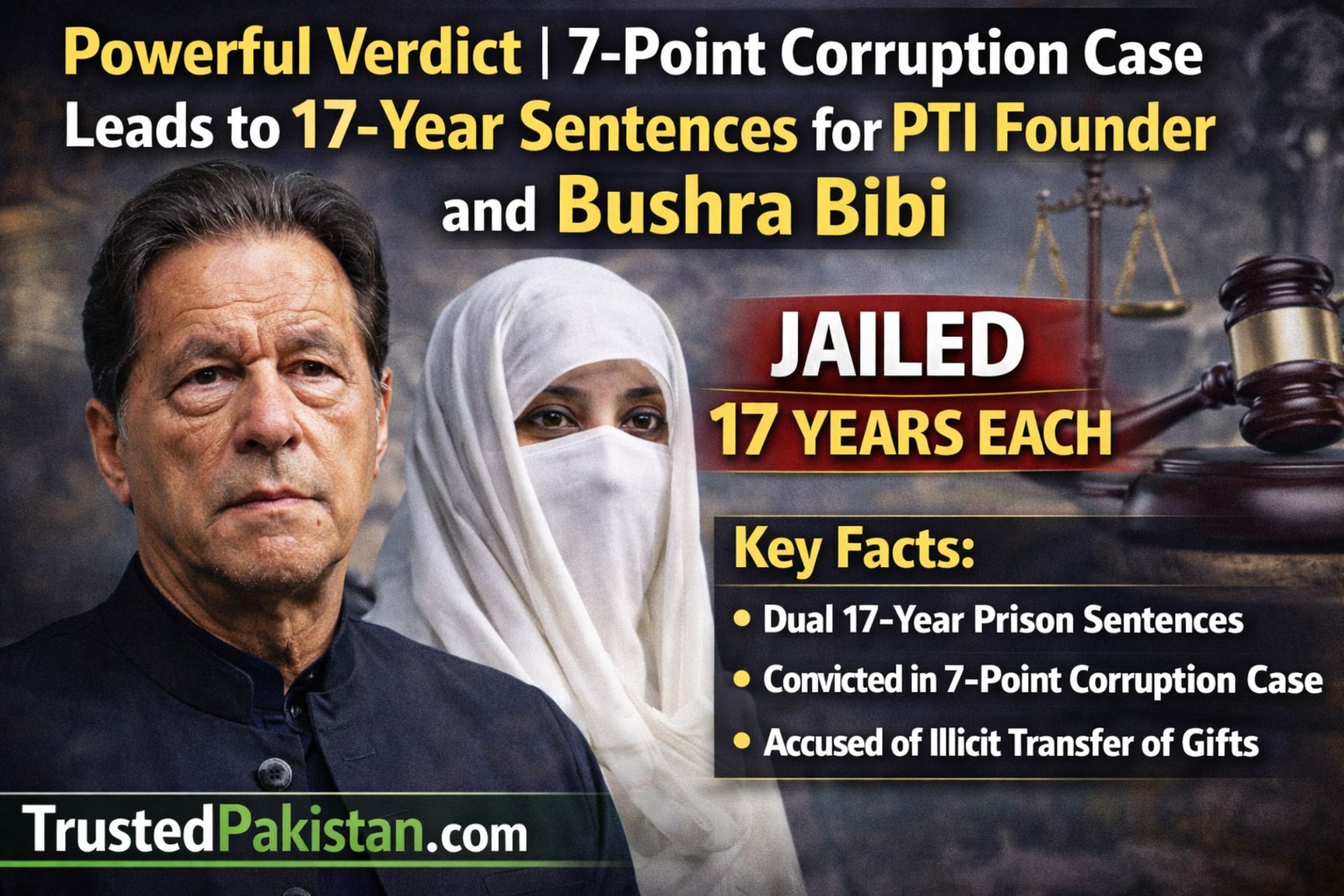
Powerful Verdict | 7-Point Corruption Case Leads to 17-Year Sentences for PTI Founder and Bushra Bibi
The Toshakhana Case Verdict has made headlines across Pakistan after the Anti-Terrorism Court (ATC) handed down 17-year prison sentences to the founder of Pakistan Tehreek-e-Insaf (PTI) and Bushra Bibi. The ruling marks a powerful statement in the country’s ongoing efforts to hold high-profile figures accountable for corruption and misuse of state resources.
Toshakhana Case Verdict | Background and Charges
The Toshakhana Case Verdict stems from allegations regarding the misuse of the government’s Toshakhana — a repository of gifts and valuables received by state officials. Investigations revealed that the accused allegedly misappropriated state gifts for personal benefit, violating anti-corruption laws and ethical standards.
According to reports by the National Accountability Bureau (NAB) , these actions involved high-value gifts and assets that were not properly declared or returned as required under law.
Powerful Sentencing: 17 Years for Each Accused
In a landmark decision, the ATC ruled that both the PTI founder and Bushra Bibi are to serve 17 years in prison each. The verdict also includes fines and the seizure of misappropriated assets to ensure restitution to the state.
Legal analysts describe this as a powerful precedent in Pakistan’s fight against political corruption. It signals that misuse of public resources will be met with strict accountability, regardless of an individual’s political status or influence.
Toshakhana Case Verdict: Implications for Governance
The Toshakhana Case Verdict carries wide-ranging implications:
- Strengthening rule of law: Ensures all officials, including high-ranking politicians, are held accountable.
- Restoring public trust: Demonstrates the government’s commitment to transparency and anti-corruption measures.
- Deterrence effect: Serves as a warning against the misuse of state property in the future.
According to Transparency International Pakistan, consistent enforcement of anti-corruption laws is critical to promoting good governance.




Toshakhana Case Verdict and Public Reaction
The announcement of the Toshakhana Case Verdict has sparked intense public discussion. While some citizens applaud the strong stance against corruption, others debate the broader political and legal implications. Analysts note that such high-profile cases are instrumental in shaping Pakistan’s governance culture and reinforcing accountability at all levels.
Related Legal and Political Context
The Toshakhana controversy is part of a broader series of cases involving political figures and misuse of state privileges. Legal experts believe the Toshakhana Case Verdict will influence ongoing investigations and strengthen institutions responsible for monitoring public officials’ conduct.
For more details on Pakistan’s ongoing political and legal developments, see our internal coverage on High-Profile Corruption Cases .
Why the Toshakhana Case Verdict Matters
The Toshakhana Case Verdict is significant because it demonstrates:
- Pakistan’s commitment to upholding the law without political bias
- The importance of transparency in public service
- The necessity of institutional reforms to prevent future corruption
Experts suggest that continuous enforcement of anti-corruption laws is essential for strengthening Pakistan’s democratic and administrative framework.
International and Regional Implications of the Toshakhana Case Verdict
The Toshakhana Case Verdict is also drawing attention at the international level, signaling to global observers that Pakistan is serious about enforcing anti-corruption laws even for high-profile political figures. Regional partners and international investors are closely watching how such legal precedents are applied, as they reflect Pakistan’s commitment to transparency, good governance, and the rule of law. Analysts suggest that consistent enforcement of accountability measures can improve Pakistan’s image in global economic forums and encourage foreign investment.
Conclusion
The Toshakhana Case Verdict represents a powerful message from Pakistan’s judiciary: misuse of state resources will not be tolerated. By holding prominent figures accountable, the verdict underscores the importance of integrity, transparency, and governance in public office.
With the enforcement of this ruling, Pakistan sets a precedent that reinforces the rule of law, promotes public trust, and signals a firm stance against corruption at the highest levels.
